Understanding Brake Hose Expansion: The Hidden Cause of Spongy Pedal Feel
A spongy brake pedal is more than just an annoyance—it’s a symptom of compromised braking performance. While air in the lines is a common suspect, a frequently overlooked culprit is hydraulic brake hose expansion, often referred to as "ballooning." This technical analysis explains the physics behind hose expansion, how it directly degrades braking feel and safety, and why upgrading to advanced materials like braided stainless steel lines is the definitive engineering solution.
The Physics of "Ballooning": Why Rubber Hoses Expand Under Pressure
A brake hose is not a rigid pipe; it's a flexible vessel designed to contain high-pressure hydraulic fluid. When you press the brake pedal, you generate hydraulic pressure—often exceeding 1,000 psi during a hard stop. This pressure acts radially (outward) on the inner wall of the hose.
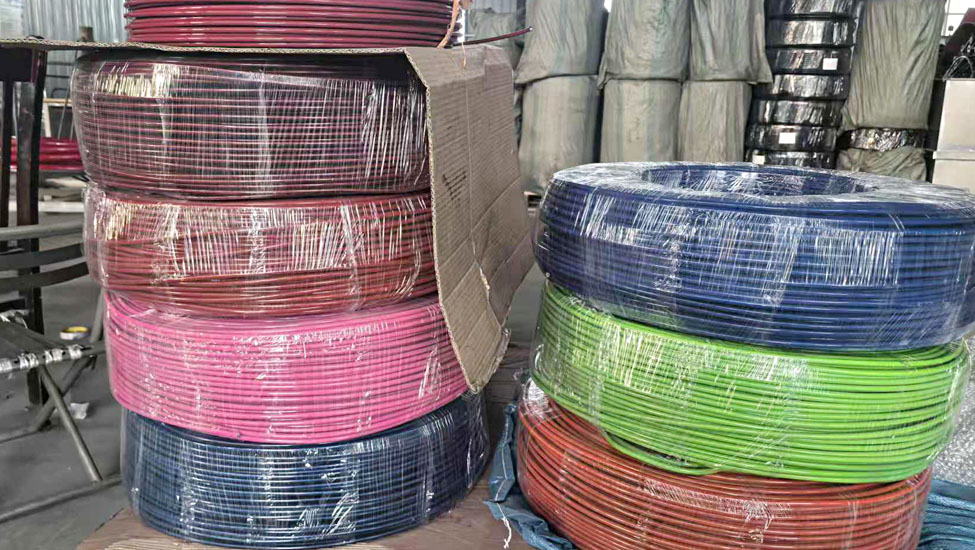
Standard Rubber Brake Line Assemblies are constructed with an inner rubber tube, a reinforcing textile or metal mesh, and an outer rubber cover. While the reinforcement provides strength, the rubber components are elastomers. Under pressure, they exhibit a degree of elasticity, causing the hose diameter to increase slightly. This increase in internal volume "consumes" a portion of the brake fluid displaced by the master cylinder. Instead of that fluid volume moving the caliper piston, it is wasted in expanding the hose wall.
The Result: A Direct Trade-off Between Hose Expansion and Brake Response
The expanded volume creates a soft spring in the system. The pedal must travel further to first take up this slack (the expansion) before pressure can build effectively at the caliper. This manifests as:
- Longer Pedal Travel: The pedal sinks closer to the floor.
- Reduced Modulation: It's harder to apply precise, incremental braking force.
- Inconsistent Feel: Expansion can vary with hose age, temperature, and pressure, making pedal feel unpredictable.
Material Matters: Why Standard Rubber is the Weak Link
The expansion characteristic is inherent to the material. EPDM/NBR rubber, while cost-effective and flexible, has limited resistance to radial expansion. The problem worsens with:
- Age and Heat Cycling: As rubber ages and is repeatedly heated by brake components, it can become softer and more prone to expansion.
- Internal Degradation: Contaminated brake fluid can break down the inner liner, weakening its structure.
This is why a proactive replacement of rubber hoses is recommended every 5-7 years. However, replacement with another rubber assembly only resets the clock on the same problem.
The Engineered Solution: Braided Stainless Steel Over PTFE Lines
To eliminate expansion, you must change the hose's construction. This is where performance braided brake lines excel.
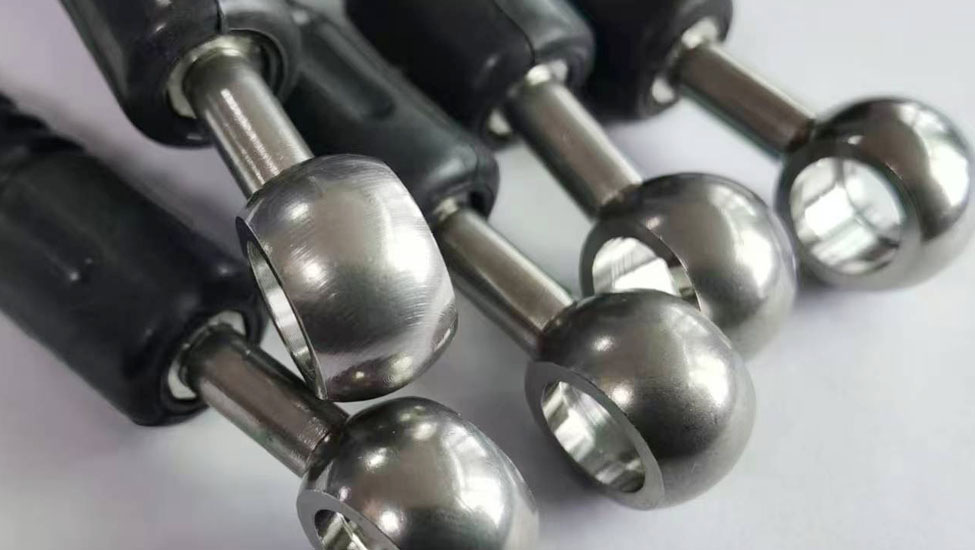
Core Technology: A Teflon Brake Line uses a Polytetrafluoroethylene (PTFE) inner core. This is then sheathed in a tight, cross-woven braid of high-tensile stainless steel. The PTFE provides a smooth, inert fluid passage, while the stainless steel braid provides the structural integrity.
How it Solves Expansion: The stainless steel braid has extremely high tensile strength and very low elasticity. It acts as a rigid cage around the PTFE liner, limiting its radial expansion to typically less than 2**—compared to 15-20** or more for a degraded rubber hose. This near-zero expansion means virtually all the fluid displacement from the master cylinder is transmitted directly to the caliper, resulting in an immediate, firm pedal.
For a complete, bolt-on solution, a pre-configured PTFE Brake Line Assembly kit is the optimal choice, ensuring perfect fitment and performance.
Product Selection and Technical Consultation
Unsure if your spongy pedal is due to hose expansion or another issue? Choosing the right upgrade path depends on your vehicle and usage. For harsh environments or performance driving, the upgrade to braided lines is clear. For commercial or industrial applications, a durable Nylon Brake Line may offer a robust alternative with less expansion than rubber.
Need help diagnosing your brake feel or selecting the correct kit? Here you can obtain valuable brake line technical articles and direct factory support. A professional brake line team is ready to solve your problems. If you have any questions, you can scan the QR code on our site to consult us or email antutech2026@gmail.com for instant chat support.
FAQ: Hose Expansion and Upgrade Benefits
Q: How can I test if my brake hoses are expanding excessively?
A> A definitive test requires pressure gauges. However, a strong indicator is a spongy pedal that does not improve after a thorough, proper brake bleed. If the pedal is firm with the engine off but becomes long and soft only when the hydraulic pressure is high (during a hard stop), hose expansion is a likely cause.
Q: Do braided lines completely eliminate a spongy pedal?
A> They eliminate the sponginess caused by hose expansion. If the pedal is still spongy after installing braided lines, the cause is elsewhere: air in the system, a failing master cylinder, or severely worn components.
Q: Are braided lines only for track cars?
A> Absolutely not. The benefit of a firm, consistent pedal improves safety and driver confidence in any vehicle, from a family sedan to a towing vehicle. It's an upgrade in control and predictability for everyday driving.