Material Comparison: How Hose Construction Impacts Brake Pedal Firmness
The choice of material in a brake line is not merely aesthetic; it fundamentally alters the physics of hydraulic transfer. For modified vehicles in Japan and Korea, pedal feel is a critical performance metric.
1. Elastic Hysteresis in Rubber
Rubber compounds exhibit "elastic hysteresis," meaning they absorb energy when deformed. Under braking, the hose expands, and this absorbed energy is lost, leading to a vague pedal. Nylon Brake Line options reduce this hysteresis due to the higher tensile strength of polyamide.
2. Zero-Expansion Properties of PTFE
Polytetrafluoroethylene (PTFE) has virtually zero coefficient of expansion. It does not stretch or balloon under load. PTFE Brake Line Assembly products maintain a constant internal volume, providing a linear and firm pedal response essential for track use.
3. The Role of Stainless Steel Braiding
Braiding acts as a restraint layer. Without it, even high-performance materials can expand. Braided brake lines physically prevent the inner hose from expanding, ensuring that pressure applied at the master cylinder is instantly transmitted to the caliper.
Upgrade Options for Performance Applications
Need a custom specification for your market? Provide us with your technical drawings or sample photos. Get in touch with our factory engineers.
Buying Considerations for International Buyers
Ensure the inner diameter (ID) matches the OEM specification (usually 3.2mm or 4.8mm). An incorrect ID can restrict flow, while a mismatched fitting thread pitch (e.g., M10x1.0 vs M10x1.25) will cause leaks.
FAQ
Are braided brake lines suitable for all models?
Yes. With correct specifications, they fit most Japanese, Korean, European, and American platforms. Custom assemblies can be manufactured for specific applications.
Does the color of the hose affect performance?
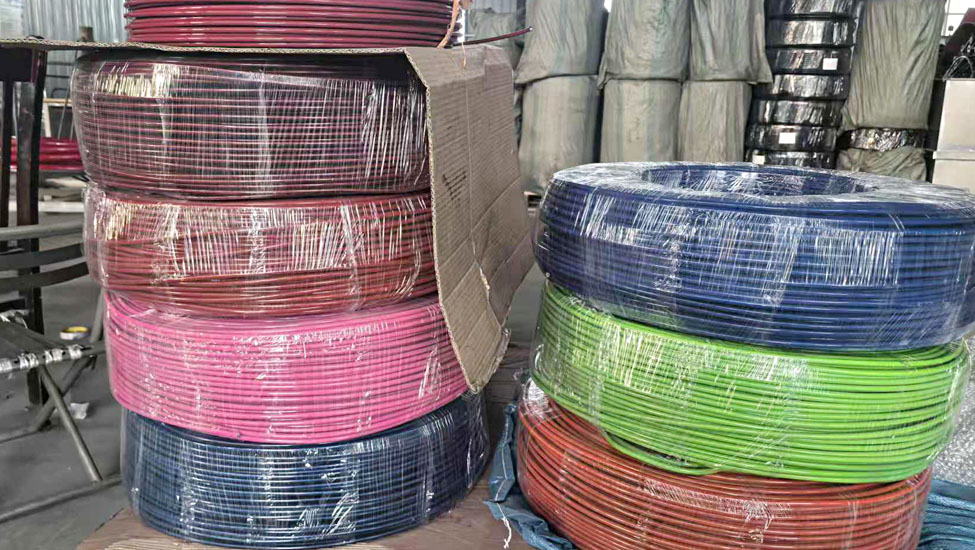
No. The outer color (often PVC or Nylon) is for aesthetics and abrasion resistance. The performance is determined by the inner core material and the braiding.