Brake Hose Corrosion vs. Aging: When Should You Replace Your Brake Hose?
A brake hose can look acceptable from a short distance and still require closer inspection. Age, heat, moisture, chemicals, repeated flexing, abrasion, and corrosion can gradually affect brake hose performance.
This is particularly important for motorcycles and modified vehicles, where brake hoses may experience frequent suspension movement, tighter routing, higher operating temperatures, or changes to the original brake components.
Understanding the difference between normal aging, external damage, and corrosion can help vehicle owners, workshops, and brake parts buyers make better replacement decisions.
How Brake Hoses Age Over Time
Rubber Hose Aging
Rubber brake hoses are flexible and widely used in standard braking systems. However, rubber is affected by heat, ozone, environmental exposure, chemicals, and repeated flexing.
As a rubber hose ages, its surface may become harder or develop cracks. Swelling, soft spots, abrasion, and other abnormalities should be investigated rather than ignored.
Metal Fitting Corrosion
Even when the hose itself remains flexible, its fittings may be exposed to moisture and road contamination. Corrosion around the fitting can become a more serious concern if it affects the threads or sealing surfaces.
Mechanical Abrasion
A brake hose that repeatedly contacts a wheel, suspension component, bracket, frame, or sharp edge can suffer external damage. Correct routing is therefore as important as hose material.
6 Signs Your Brake Hose May Need Replacement
1. Cracks on the Outer Surface
Visible cracking is one of the most recognizable signs of hose deterioration. Small surface cracks should be investigated, particularly when the hose has been exposed to high temperatures or has been in service for many years.
2. Swelling or Bulging
A section of hose that appears swollen or unusually expanded requires attention. This can indicate internal or structural deterioration.
3. Fluid Leakage
Brake fluid around the hose, fitting, or connection point is a clear reason for inspection. Do not continue normal driving until the cause has been identified and the braking system has been properly assessed.
4. Severe Corrosion Around Fittings
Light surface discoloration is not necessarily equivalent to structural failure. However, deep rust, pitting, damaged threads, or corrosion around sealing surfaces should be treated seriously.
5. Damaged Outer Protection
For stainless steel braided brake hoses, inspect the braid and any protective outer coating. Damage caused by abrasion or incorrect routing should be corrected before it develops into a larger problem.
6. Changes in Brake Feel
A change in brake pedal or lever feel can have many causes. Air, fluid condition, caliper problems, master cylinder issues, hose expansion, and hydraulic leakage should all be considered during diagnosis.
When Is It Better to Upgrade Instead of Simply Replace?
For a standard vehicle, replacing a damaged hose with a correctly specified replacement may be the most practical approach. For modified motorcycles, performance cars, racing applications, or vehicles with changed brake components, the hose specification may need to be reconsidered.
Stainless Steel Braided Brake Lines
Performance-oriented customers often choose braided brake lines because the reinforcement can reduce hose expansion compared with some conventional rubber hose constructions.
The result can be a more consistent brake lever or pedal feel when the complete brake system is correctly designed and maintained.
Teflon Brake Line
A Teflon Brake Line uses a PTFE inner tube and can be combined with reinforcement and protective layers according to the application.
PTFE is commonly considered for performance and custom hydraulic applications because of its chemical resistance and temperature characteristics.
Nylon Brake Line
A Nylon Brake Line may be suitable for applications where flexibility, weight, chemical resistance, and specific installation requirements are important.
However, buyers should always confirm the actual pressure, temperature, brake fluid compatibility, and vehicle application before selecting a nylon brake hose solution.
What Should You Consider When Buying an Aftermarket Brake Hose?
Material
The first question is not simply whether a hose is rubber, PTFE, or nylon. The complete hose construction needs to match the intended brake system.
Reinforcement
For braided brake hoses, buyers should understand the reinforcement material and construction. Stainless steel braid, protective coating, and braid density can influence the final product characteristics.
Fittings
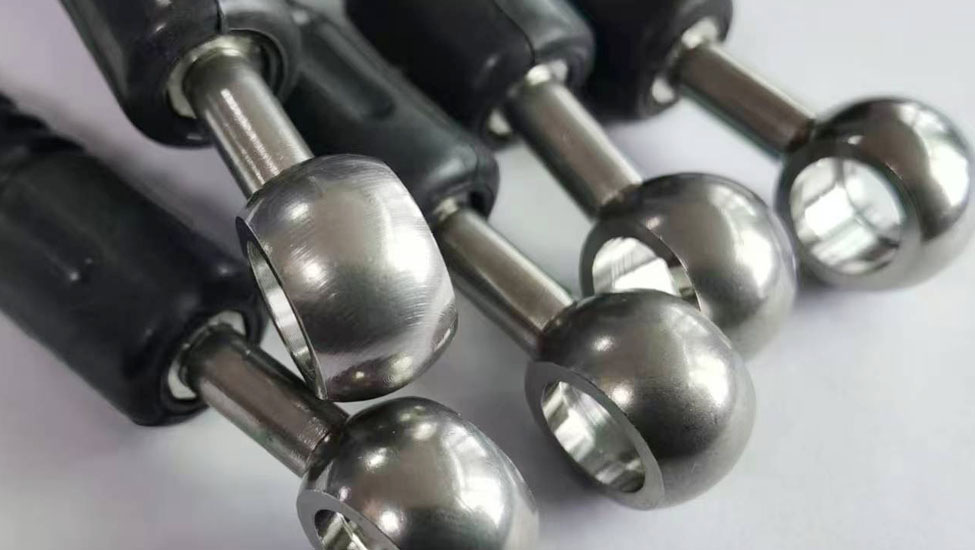
Correct fitting selection is critical. Thread type, fitting angle, banjo design, sealing method, and material should be confirmed before production.
Length
Custom brake hoses should be measured according to the actual installation route. A hose that is too short may be placed under tension, while excessive length can create unwanted loops or contact with moving parts.
Quality Inspection
For importers and distributors, quality control should be considered before placing an order. Useful inspection items can include hose dimensions, fitting dimensions, leakage testing, pressure testing, visual inspection, and assembly consistency.
Complete Brake Hose Assemblies for Different Applications
PTFE Brake Line Assembly
A PTFE Brake Line Assembly combines the selected hose construction with the required fittings and assembly dimensions.
This is useful for customers who need a finished component rather than raw hose. Custom lengths and fitting configurations can be discussed according to the application.
Nylon Brake Line Assembly
For suitable applications, a Nylon Brake Line Assembly can be manufactured according to the required dimensions and connection specifications.
Rubber Brake Line Assembly
For conventional replacement applications, a Rubber Brake Line Assembly can provide a flexible solution when the rubber hose specification matches the vehicle's braking system.
Brake Hose Maintenance for Motorcycles and Cars
Inspect After Installation
After installing a new brake hose, check the entire routing while turning the steering or moving the suspension through its normal range. Make sure the hose does not become stretched or twisted.
Check After Heavy Use
Motorcycles used for touring, off-road riding, modified vehicles, and performance applications may require more frequent visual inspection because of their operating conditions.
Keep Brake Fluid in Good Condition
Brake fluid should be replaced according to the vehicle or brake fluid manufacturer's recommendations. Moisture-contaminated fluid can affect braking performance and contribute to internal corrosion.
Inspect the Fittings During Servicing
Whenever a brake hose is removed, inspect the fitting, sealing surfaces, threads, and washers before reassembly.
What Overseas Brake Hose Buyers Usually Need to Confirm
When sourcing brake hoses internationally, professional buyers often need more than a product photograph. Technical consistency and repeatability are important when the product will be sold through a distribution network.
Product Specification
Provide clear information about hose construction, dimensions, fitting specifications, and application.
OEM or Custom Requirements
If the product is intended to replace an existing hose, a sample or drawing can help reduce specification errors.
Packaging and Identification
For distributors, packaging, labeling, part numbers, barcodes, and product identification may also be important for warehouse management and retail sales.
Production Consistency
For repeat orders, dimensional consistency and stable fitting assembly are important. A supplier should be able to understand the technical requirements rather than simply quote a price.
FAQ: Brake Hose Replacement and Upgrades
How often should a brake hose be replaced?
There is no universal replacement period for every brake hose. Age, condition, mileage, climate, vehicle use, material, and manufacturer recommendations should all be considered. Regular visual inspection is essential.
Does upgrading to a braided brake hose really improve braking safety?
A properly specified braided brake hose can reduce hose expansion and provide additional mechanical protection compared with some standard hose constructions. However, it does not automatically improve every part of the braking system. Correct installation and overall brake system condition remain critical.
Are braided brake lines suitable for all vehicles?
Braided brake lines are available for many motorcycles, cars, SUVs, and modified vehicles, but the exact hose and fitting specification must match the application. Length, routing, connection type, pressure rating, and temperature requirements should be confirmed.
Should I choose PTFE or rubber brake hose?
Neither material is universally better for every application. Rubber can be practical for many standard replacement applications, while PTFE-based constructions are often selected for performance and custom applications. The correct choice depends on the vehicle, operating environment, required specifications, and budget.
Can you make brake hoses from our drawing?
Yes. A technical drawing can provide useful information about hose length, fitting position, angle, thread specifications, and other dimensions. A physical sample can also be used when available.
Can you develop a brake hose for a new vehicle application?
Yes. Vehicle information, original hose samples, drawings, fitting specifications, required quantity, and application details can be used to evaluate a new brake hose project.
Custom Brake Hose Manufacturing
We manufacture brake hose solutions for motorcycles, cars, SUVs, electric vehicles, ATVs, modified vehicles, and other hydraulic brake applications.
Our product range includes Teflon brake lines, PTFE brake line assemblies, nylon brake lines, nylon brake line assemblies, rubber brake hose assemblies, and stainless steel braided brake lines.
For OEM replacement projects, aftermarket distribution, motorcycle modification, or custom brake system development, the specification should be confirmed before production.
If you have an existing brake hose, drawing, sample, vehicle information, or fitting specification, contact our team and send us the details.
We can review the requirements and discuss the appropriate hose construction, fittings, dimensions, and production solution.