The Physics of Failure- Understanding Why Your Brake Hose Balloons Under Pressure

time:2026-5-20 9:52:28 Click:

The Physics of Failure: Understanding Why Your Brake Hose Balloons Under Pressure

It's Not Just a Hose – It's a Pressure Vessel Under Constant Stress

For workshop technicians in high-performance markets or regions with demanding driving conditions, a bulging brake hose is more than a visual defect; it's a clear and present danger. This ballooning effect, where a section of the flexible line swells when the brake pedal is applied, represents a fundamental failure of the hose's structure. It directly steals hydraulic pressure that should be clamping the brake pads, resulting in a long, mushy pedal, increased stopping distances, and ultimately, the risk of a sudden rupture. To understand the fix, we must first understand the physics of the failure.

Anatomy of a Standard Hose: The Weak Link in the Chain

A conventional Rubber Brake Line Assembly is a composite. Its core is a synthetic rubber inner tube, wrapped in one or two layers of braided textile (often polyester or aramid) for strength, and sealed with an outer rubber jacket for environmental protection. The textile braid is the load-bearing element, designed to contain the hydraulic pressure.

The Failure Sequence:

  1. Material Degradation: Over time, heat from the engine and brakes, coupled with ozone and UV exposure, causes the rubber components to lose elasticity and become brittle.
  2. Braid Weakening: More critically, moisture from contaminated brake fluid can lead to internal corrosion of the individual textile fibers within the reinforcing braid. This corrosion is often invisible from the outside.
  3. The Breaking Point: When you press the brake pedal, hydraulic pressure (often over 1,000 PSI) pushes outward against the hose wall. If the reinforcing braid is compromised, it can no longer resist this force. The weakened textile strands stretch or break, allowing the inner rubber tube to expand like a balloon—this is the visible bulge you see.

The Engineering Solution: Eliminating the Weak Link with Superior Materials

The solution is to replace the degradable textile/rubber composite with a permanently stable structure. This is the core value of performance brake lines.

  • The Inner Core Upgrade: We replace the rubber tube with a seamless, extruded liner of Teflon (PTFE) or reinforced Nylon. These polymers are chemically inert and have far higher tensile strength, but more importantly, they do not degrade when exposed to brake fluid.
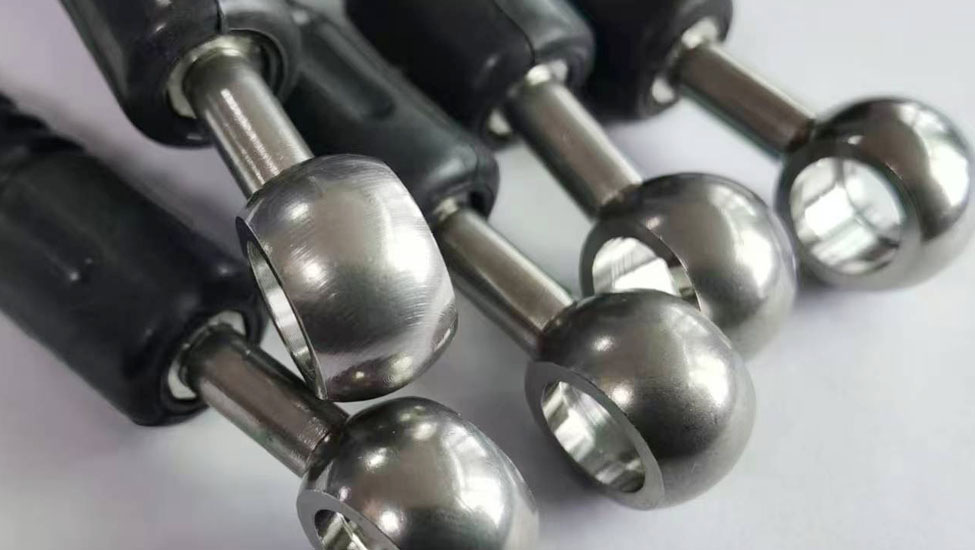
  • The Reinforcement Revolution: Instead of textile, we use a tightly woven sleeve of 304-grade stainless steel braid. This metal mesh has a tensile strength orders of magnitude higher than textile. In a PTFE Brake Line Assembly, the stainless steel braid provides near-absolute resistance to radial expansion, typically limiting it to less than 2** under pressure, compared to up to 30** in a failing rubber hose.

This combination—an inert PTFE liner inside a stainless steel cage—makes physical ballooning impossible. The pressure is efficiently transmitted to the caliper, not wasted on stretching the hose.

Backed by Factory-Grade Quality Control

Specifying the right materials is one thing; ensuring every hose meets that specification is another. This is where our manufacturing commitment ensures reliability.

Our factory boasts ample production capacity, multiple production lines, strong technical development capabilities, and comprehensive testing methods.

Every batch of stainless steel wire and PTFE tubing is validated. Every finished Nylon Brake Line Assembly or braided brake line undergoes pressure and burst testing. This systemic approach is what allows us to guarantee that the hose you install will not balloon, today or a decade from now.

Seeing frequent hose ballooning in vehicles from your market? A professional brake line team is ready to solve your problems. Describe the common vehicle types and failure modes you encounter, and we can recommend the most effective upgrade path—whether it's a durable Nylon solution or the ultimate Teflon braided line.

FAQ: Safety, Longevity, and the Upgrade Imperative

  • Q: How often should flexible brake hoses be inspected for signs of swelling or degradation? A: We recommend a visual and physical inspection at least once a year. Feel the hoses for soft spots or bulges. For rubber hoses, a proactive replacement every 5-7 years is wise preventative maintenance, as internal braid corrosion is invisible.
  • Q: Does upgrading to a braided stainless steel line truly make my vehicle safer, or is it just for race cars? A: The safety benefit is absolute and applies to all vehicles. By eliminating hose expansion, you ensure that 100** of the force from your foot is used to apply the brakes, not stretch a hose. This provides consistent, predictable pedal feel—the cornerstone of safe braking—especially during emergency stops or when towing. It’s an upgrade that benefits every driver.

Code

Funfact Icon
Product category
Funfact Icon
Factory History
Funfact Icon
customers
Funfact Icon
Sales country

News list

Here you can obtain valuable Brake Line Brake Hose technical articles
WhatsApp

Instant Chat Support

telephone

+8618903185773

send an email

nina@brakelinefactory.com

Scan to follow

Get the latest information

Scan the code to follow

Back to top

Return to the top of the page