- +86 18903185773
- nina@brakelinefactory.com
- Monday - Sunday 9.00 - 18.00

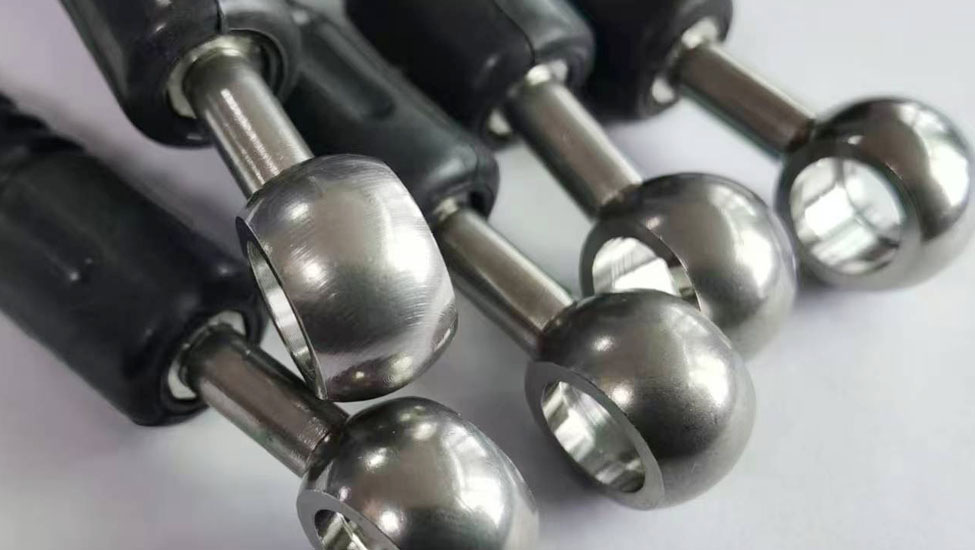
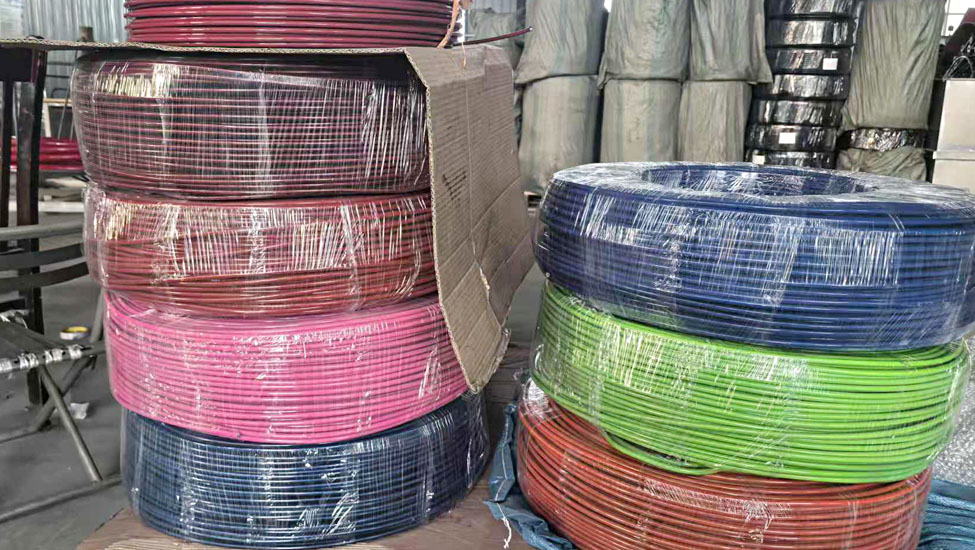
At our ISO-certified factory, we test brake hoses under accelerated aging conditions that simulate years of use in weeks. One key finding is that environmental factors drastically speed up the degradation processes that lead to swelling. For our customers in Southeast Asia, the Middle East, Japan, and Africa, understanding this link is crucial for vehicle safety and choosing the right components.
Primary Stressor: Constant under-hood temperatures often exceeding 100°C (212°F).
Effect on Rubber: Heat accelerates the "drying out" of rubber, causing the polymers to lose plasticizers and become hard and brittle—a process called thermo-oxidative degradation. While this often leads to cracking, it also weakens the internal structure, making the liner more susceptible to softening and delamination under the combined stress of heat and pressure.
Localized Swelling Risk: High. Hoses near exhaust manifolds or in areas with poor airflow are most vulnerable.
Material Solution: PTFE (Teflon) has a maximum continuous service temperature far exceeding any engine bay, and its properties do not change with heat. This is why our PTFE Brake Line Assembly is the recommended specification for these regions.
Primary Stressor: Moisture permeation and internal corrosion.
Effect on the System: Humid air allows moisture to permeate through the microscopic pores in standard rubber hose walls. This moisture contaminates the brake fluid, making it acidic. This acidic fluid then attacks the inner rubber liner (causing it to soften and swell) and corrodes any internal steel reinforcement, further weakening the hose's anti-expansion properties.
Material Solution: A hose with a moisture barrier. Reinforced nylon has very low permeability. PTFE is completely impermeable, sealing the fluid in and moisture out.
Primary Stressor: External corrosion of reinforcement.
Effect: Salt causes the external steel reinforcement on a hose to corrode. As the braid loses strands, its ability to restrain the inner hose from expanding is diminished. A weakened braid on a rubber hose can lead to swelling and eventual rupture at lower pressures.
Material Solution: For any braided line in this environment, a protective PVC or nylon sheath over the stainless steel braid is mandatory to prevent direct salt contact.
For distributors and workshops, selling the right hose for the climate builds trust and prevents comebacks.
| Climate / Threat | Not Recommended | Recommended Upgrade | Ideal / Premium Solution |
|---|---|---|---|
| Extreme Heat & UV | Standard Rubber Hose | Nylon Brake Assembly | PTFE Brake Assembly (UV-resistant sheath) |
| High Humidity & Salt Air | Standard Rubber Hose | Sheathed Nylon Assembly | Sheathed PTFE Assembly (316 SS fittings) |
| Road Salt & Corrosion | Any un-sheathed braided line | Sheathed Nylon Assembly | Sheathed PTFE Assembly |
| General Performance | Standard Rubber Hose | Nylon Brake Assembly | PTFE Brake Assembly |
Q: In the desert, my rubber hoses crack. Is that related to swelling?
A: Yes, it's part of the same degradation process. The outer cover cracks from UV/ozone, which then allows more heat and contaminants to attack the inner layers, accelerating the internal softening that leads to swelling.
Q: Are braided lines harder to install?
A> No. Our PTFE and Nylon Assembly kits are vehicle-specific, direct bolt-on replacements. The key difference is the superior performance and longevity.
Q: We service many older vehicles. Are these upgrades suitable?
A> Absolutely. Proactively replacing aged, swollen-prone rubber hoses on a classic or older car with a durable braided line is one of the best safety investments you can make.
Choose brake components engineered for your environment, not against it. By selecting advanced materials like PTFE and reinforced nylon, you can break the cycle of heat- and moisture-induced degradation that leads to hose swelling and failure. Contact us to discuss the optimal brake line specification for your local market conditions and vehicle applications.


Here you can obtain valuable Brake Line Brake Hose technical articles
How Stainless Steel Braided Br
Read More Why Do Motorcycle Brake Lines
Read More How to Choose the Right Motorc
Read MoreInstant Chat Support
+8618903185773
nina@brakelinefactory.com
Get the latest information
Scan the code to follow
Return to the top of the page